Showing posts with label entertainment commentary. Show all posts

1.27.2010

R#09's Top 25 Video Games of All Time! (One + Honorable Mentions)


And so here we are. The moment you've all been waiting for. It's my favorite video game of all time (plus a heaping pile of honorable mentions). I hope you've all enjoyed this little countdown of mine. Thank you for reading and commenting!


No. 01 — Chrono Trigger
Genre: Role-Playing Game
Release: 1995
Platforms: Super Nintendo, PlayStation, Nintendo DS

This, for me, is storytelling at its best. Chrono Trigger spans thousands and thousands of years. The cast of characters — which includes a female mad scientist, a princess, a robot, a cave woman, a formerly evil dark wizard, and a frog knight — are lead by the red-haired, katana-wielding Crono as they bound across time to battle an ancient evil. Intricately plotted and sporting an epic soundtrack the likes of which had never been heard before, Chrono Trigger was, and certainly still is, a true masterpiece of the medium. As I’ve said, I was a Genesis kid growing up. But every time my Uncle Mike would visit from California and bring his SNES along, it was Chrono Trigger and Super Mario World for me. Chrono Trigger always enthralled me, and continues to do so today. Chrono Trigger is the Citizen Kane of video games. And that, my friends, is why that makes it my favorite video game of all time.


Honorable Mentions:

Doom, Doom II, Warcraft II: Tides of Darkness, Warcraft III: Reign of Chaos, Choochoo Rocket, Halo: Combat Evolved, Baldur’s Gate, Day of the Tentacle, Streets of Rage II, Metal Gear Solid II: Sons of Liberty, Unreal Tournament, Duke Nukem 3D, Final Fantasy IV, Final Fantasy VI, X-Com, Grandia II, Shenmue II, The Chronicles of Riddick: Escape from Butcher Bay, Warhammer 40k: Dawn of War, Super Smash Bros., Super Smash Bros. Brawl, Super Smash Bros. Melee, Batman: Arkham Asylum, Resident Evil, Spiderman and Venom: Maximum Carnage, Rocket Knight Adventures, Golden Axe, Golden Axe II, Mario Tennis, Mario Kart 64, The Legend of Zelda: A Link to the Past, Heroes of Might and Magic II, Missile Command, GoldenEye 007, Soul Calibur, Soul Calibur IV, Plants vs. Zombies, Perfect Dark

1.26.2010

R#09's Top 25 Video Games of All Time! (6-2)

And here we delve into the final posts ... check back tomorrow for my favorite video game of all time, plus a heaping pile of honorable mentions for those games that are rad, but didn't quite make the cut. Hope you've all enjoyed reading this as much I did writing it. Cheers.


No. 06 — Baldur’s Gate II: Shadows of Amn
Genre: Role-Playing Game
Release: 2000
Platforms: Microsoft Windows, Mac OS

I have very fond memories of playing through the original Baldur’s Gate with my dad. I was drawn to the rich story, the unique characters (who were never quite as they seemed), and the simple, point-and-click gameplay that faithfully brought Dungeons and Dragons to the PC. Baldur’s Gate II: Shadows of Amn is everything its predecessor was and so much more. You know why these Baldur’s Gate games were so great? The player truly interacted with the world, with the characters that inhabitated it, and the villains that sought to control it. This was so much more than the hack-and-slash RPGs that permeate the genre right now. This is as faithful a representation of D&D as anything out there — the character can choose to fight his or her way out of situations, or negotiate, or one of dozens of other options. Good, evil, neutral, whatever. This is a true sword and sorcery adventure, and one that is a classic of the genre.


No. 05 — Super Mario World
Genre: Platformer
Release: 1990
Platforms: Super Nintendo, Game Boy Advance, Virtual Console

This is it. This is the game that turned me into a gamer. It’s the first game that I truly, legitimately marveled at. The levels were fast, brutal, and inventive. The graphics were bright and colorful and crisp — truly some of the best on any console, then or now. The music? Classic. The boss battles? Enjoyably frustrating. This is the Mario game to end all Mario games — the greatest platformer of all time. I still play this regularly to this day. And really, nothing beats throwing a Koopa shell into a line of Goombas, or getting a 1-Up by bouncing on a Bullet Bill, or getting so much air using the yellow cape that you literally soar across the entire level. Ah, memories.


No. 04 — Mass Effect
Genre: Action / Role-Playing Game
Release: 2007
Platforms: Xbox 360, Windows

I know, I know. Not only is this the most recent game in the top ten, but Mass Effect, while being generally well-received, is not without its flaws. But for me, Mass Effect did what no game had in nearly a decade — it forced me to care. There is a moment in Mass Effect, about three-fourths of the way through — I won’t give exact details for those who haven’t played it. But in this moment, the player must decide who lives and who dies. Not random non-playable characters or random sprites. No, you must choose between two characters who have been with you, fighting by your side, through the entirety of the game. And that … was a very real, very visceral moment in gaming, for me, at least. I sat there, mouth agape, controller limp in my hands, as the dialog window sat open before me, urging me to choose. I think I waited 20 minutes before making a selection. Mass Effect did so many things right — the story was engrossing, the style cinematic (epic, if you will). It had tangible characters with real backstories, and a sci-fi world that, somehow, made perfect sense. Like Baldur’s Gate before it (another BioWare title), Mass Effect had an environment the player could truly interact with and a world they could take part in. I thought about this game for weeks after beating it, saddened it was over. Thankfully, there’s a sequel — it was released today, actually. And you’ll be hearing my thoughts on it soon, undoubtedly.


No. 03 — The Legend of Zelda: Ocarina of Time
Genre: Adventure
Release: 1998
Platforms: Nintendo 64, Nintendo Gamecube, iQue Player, Virtual Console

If Super Mario 64 sold me on the potential of the Nintendo 64, then Ocarina of Time solidified its place in my mind as one of the great consoles. And this game — this beautiful, stunning game — is one of the greats as well. Ocarina of Time put you, the player, into the shoes of Link, a young boy destined for greatness. I think Ocarina of Time was the first game with true scope. By that, I mean that it truly felt like you were saving the realm. The first time I beat the Deku Tree dungeon and stepped out onto Hyrule Field, and the camera panned across it, I thought, “Do I get to explore all of this?” I really just couldn’t comprehend it. I mean, really — my 10-year-old self was baffled. I have to admit: I didn’t finish this game as quickly as I might have wanted to. I would get frustrated with a temple and put the game down, coming back to it every once in awhile over the course of about a year and-a-half. Now, though, I’m glad it took me that long to beat the game. It was a truly epic adventure, one that spanned months. I savored this game, enjoying every little moment. Not only is this my favorite Nintendo 64 game, it’s also one of my very favorite games of all time.


No. 02 — Neverwinter Nights
Genre: Role-Playing Game
Release: 2002
Platforms: Windows, Mac OS X, Linux

Let me tell you about Neverwinter Nights. Sit down. First off, it’s a BioWare game, sort of a spiritual successor to the Baldur’s Gate games. And second, it’s based in the Forgotten Realms setting of Dungeons and Dragons, and utilizes the 3rd and 3.5 Edition rules. It is also the game I have personally clocked more hours on than any other game ever. Literally, hundreds of hours. I kid you not. And you might be saying, “Well, Matt, that’s just sad. It’s a seven-year-old D&D game,” to which I would respond, “Shut up.” It was a damn good game. The story was epic and, in true BioWare fashion, half of the fun was meeting new characters and uncovering their secrets, developing relationships as you furthered your mission. I played through the original campaign when it was first released, then continued playing the modules. Picked up the expansions and played through their campaigns, and then, in 2004, I discovered the online community. There was a huge population of gamers playing Neverwinter Nights online on various custom worlds, all designed in different and interesting ways to suit dozens of playstyles and genres. I came across one server in particular, found myself liking the community and the atmosphere, and got hooked. I’ve been on that same server for over five years now. There are hiatuses here and there when I get burned out and take a few months to myself, but I always come back. And I think, maybe, I always will.

1.24.2010

R#09's Top 25 Video Games of All Time! (10-7)


Only four games today. Why? Well, because we want my favorite game of all time to have a post all its own. Trust me, it's gonna be OK.


No. 10 — Soul Calibur II
Genre: Fighting
Release: 2002
Platforms: Arcade, GameCube, PlayStation 2, Xbox

Kicking off the top ten is my favorite fighting game of all time, Soul Calibur II. The sequel to the fantastic Dreamcast fighting game, Soul Calibur II sported mind-blowing graphics, intuitive controls, and some of the best characters and move-sets of any fighting game ever. What really sets Soul Calibur II apart from its successors (III and IV) is its campaign mode, which is the best of the series. The game lacked the destructible environments of the Dead or Alive games and the violence of Mortal Kombat, but Soul Calibur II remains to this day the pinnacle of the genre. In terms of characters, I’ve always been partial to Cervantes and Siegfried / Nightmare.


No. 09 — Super Mario 64
Genre: Platform
Release: 1996
Platforms: Nintendo 64, iQue Player, Virtual Console

I remember so vividly seeing this game for the first time. I was in a Wal-Mart, of all places — likely dragged there by my mother on a shopping trip. I was only eight years old at the time, so I wasn’t “plugged-in” at the time. I’d heard rumors about the Nintendo 64, but I really didn’t know much about it. After all, I was a Sega kid. I played SNES only when my Uncle Mike came to visit and brought it along. But there it was, on display at Wal-Mart — the Nintendo 64. 64 bits of glorious, fully three-dimensional action; vivid greens and reds and expansive environments. As I clutched that oddly shaped controller with its analog stick in my hand for the very first time, something clicked. I knew, right then, that this would be a console to remember, and, more specifically, a game to remember. Super Mario 64 took what was great about the classic side-scrolling Mario games and dropped it into the most graphically advanced console at the time. Simple gameplay, interesting enemies, colossal levels, and, most importantly, a ton of fun.


No. 08 — Unreal Tournament 2004
Genre: First-Person Shooter
Release: 2004
Platforms: Microsoft Windows, Mac OS X, Linux

Now this? This is how you make a first-person shooter. Unreal Tournament 2004, the follow-up to Unreal Tournament 2003 and its prequel, the original Unreal Tournament (’99), is, at its core, the purest, most downright wickedly fun shooter of all time. The solo campaign is only the beginning — this game sports nearly a dozen different multiplayer modes, ranging from basic deathmatch, to capture the flag, to assault missions, and even a violent, football-esque game called Bombing Run. There were crazy vehicles, even crazier weapons, and solid A.I. to boot. Did I play the hell out of this game when it was released? Yeah. Oh, yeah. Do I still play it today? You’d better believe it. Unreal Tournament 2k4 has yet to be equaled.


No. 07 — Total Annihilation
Genre: Real-Time Strategy
Release: 1997
Platforms: Microsoft Windows, Mac OS

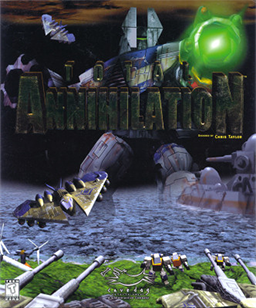
The name of this game, Total Annihilation, suggests mindless violence. It brings to mind gore, explosions, and all-out, nonsensical battle. Some of that is true, yes — the most intense moments of classic genre-definer Total Annihilation are utter and complete chaos. But what the name doesn’t hint at is the deep and engrossing strategic gameplay that put Total Annihilation on the map and changed the way real-time strategy games were made. The graphics were alarmingly good. Hundreds of units might be on the screen at the same time, blasting away at each other, explosions blossoming across the battlefield. Badass, yes. The wars were colossal. But the fact remains: Total Annihilation was, and remains today, one of the most sophisticated games in the genre. Oh, and as a side-note, the game also features one of the best soundtracks in any game ever, composed by the infamous Jeremy Soule (the John Williams of video game soundtracks).


1.23.2010

R#09's Top 25 Video Games of All Time! (15-11)


No. 15 — Streets of Rage
Genre: Side-Scrolling Beat ‘Em Up
Release: 1991
Platforms: Sega Genesis, Sega Game Gear, Sega Master System, MegaPlay, Virtual Console, iPhone OS

Let me lay it out for you: Three police officers take to the streets (of rage). They don’t carry guns. Or tasers. Or even nightsticks. They carry their fists and their feet and their complete and utter disregard for safety. Now, these streets (of rage) are in utter chaos, teeming with low-life scum, crazy ladies with whips, and gigantic guys in denim vests carrying boomerangs. And these cops? The ones with the fists? They just start wrecking face. They begin at one end of the street (of rage) and wade through until they get to the end, throwing punks through phone booths, cracking heads open with pipes, and just generally being total badasses and playing by their own set of rules. That is the entire premise of Streets of Rage, and it remains to this day a testament to how awesome things truly can be when you’re punching people in the face without remorse.


No. 14 — Rock Band 2
Genre: Rhythm Game
Release: 2008
Platforms: Xbox 360, PlayStation 3, PlayStation 2, Wii

When Harmonix announced Rock Band 2, not even a year had passed since the release of their smash-hit Rock Band, and fans were pissed — for about three seconds. You see, Harmonix followed that announcement up with a few addendums, including: 1) Rock Band 2 would be compatible will all Rock Band DLC — past, present, and future; 2) Rock Band 2 would allow owners of the previous game to export the on-disc songs to their hardrive, enabling them to play those songs in the sequel; 3) If you bought the game, Harmonix would send some free DLC your way; 4) It would be bigger, better, and improved in every conceivable way. The result? Only the single greatest rhythm game of all time. Suck it, Guitar Hero.


No. 13 — Metal Gear Solid
Genre: Stealth Action
Release: 1998
Platforms: PlayStation, PlayStation Network, PlayStation 3

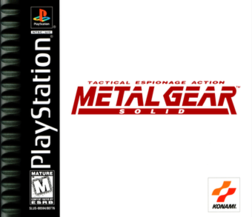
Metal Gear Solid is another one of those games that my friends and I beat in one sitting, passing the controller over when one of us got too tired to keep our eyes open. This game, along with others like Syphon Filter, concretely defined what a stealth game could and should be — open environments, tons of crafty villains, and plenty of shadowy hiding places to huddle in. The game’s gruff protagonist, Solid Snake, remains one of my favorite video game characters of all time, and the cinematic style just can't be beat. The story is just insanely complex, in a very good way. And the boss fight with Psycho Mantis? Classic. Simply classic.


No. 12 — Star Fox 64
Genre: Rail Shooter / Space Simulator
Release: 1997
Platforms: Nintendo 64, iQue Player, Virtual Console

“Do a barrel roll!” Those infamous words, uttered by Fox McCloud’s copilot, Peppy Hare, perfectly sum up Star Fox 64, one of the most insanely fun and replayable console games out there. The game is a simple rail shooter — you pilot an Arwing, a state-of-the-art space fighter operated by the Star Fox mercenary force, through predetermined paths on various planets throughout the Lylat System. You dodge obstacles, shoot down enemy aircraft, and do battle with epic end-level bosses, all of whom take great pleasure in mocking you as you blast them into space dust. What really sets Star Fox 64 apart from the rest of the pack, though, is its replay-value — the multitude of different paths that can be taken to the final battle with Andross offers players the opportunity of a completely different gameplay experience every time. Oh, and the multiplayer was awesome too.


No. 11 — Age of Empires II: The Age of Kings
Genre: Real-Time Strategy
Release: 1999
Platforms: Windows, Mac OS, PlayStation 2

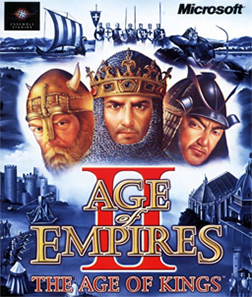
Just missing out on the top ten is Age of Empires II, another genre-definer. Players select one of a couple dozen cultures and bring them through the ages of ancient and medieval history, beginning as little more than foragers with spears, and ultimately reaching the peak of medieval advancement with troops like longbowmen and trebuchets. The game was conquest, yes — but it was also politics and economy, with resources that needed managing, and allies and enemies that needed appeasing (or butt-kicking, but you get the idea). The game was balanced, strategic, and just downright fun. I have many fond memories of epic, late-night battles on this game with friends over LAN.


1.22.2010

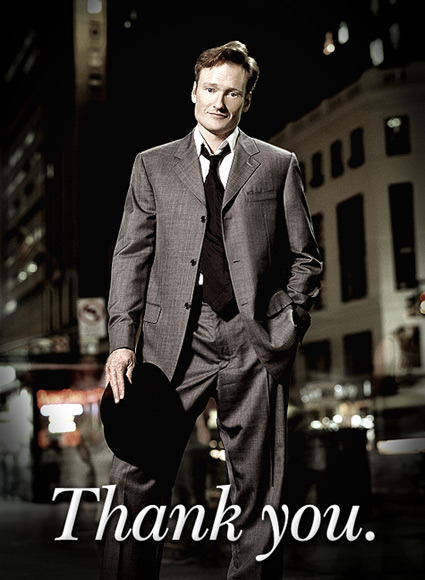
So long, Coco

Your reign will be forever remembered.


Are card games immortal?

Reposted from The Mast.


Walking into a backroom trading card game tournament, one asks oneself two questions: The first is, “What are all of these people doing here?” The second is inevitably, “Why does it seem like a majority of them don’t regularly bathe?”

The answer to the first: They’re playing a trading card game, which are still just as popular as they were in their ‘90s heyday. The answer to the second question is, unfortunately, just as elusive as it was then.

Card appeal

A trading card game (TCG), interchangeably referred to as a collectible card game (CCG) or customizable card game, is a strategy game played using specially designed sets of playing cards, which are collected, traded, bought and sold like so much currency. Players acquire the cards—which they need in order to build a well-balanced and strategically sound deck—by purchasing pre-made decks, booster packs of randomly assorted cards and even individual, high-value cards (known as “singles”). The TCG has worked so well for so long because it combines the appeal of collecting with strong strategic gameplay.

“It’s a fun way to have social interaction,” senior Tyler Gubsch said. Gubsch is a member of PLU’s “Magic: The Gathering” Club. “And it allows people to enjoy collecting things.”

The modern concept of the TCG was first seen with 1993s “Magic: The Gathering,” designed by Richard Garfield and published by the now infamous Wizards of the Coast (current license owners of “Dungeons and Dragons”). However, “Magic” is not considered to be the first example of a TCG— that distinction belongs to the “Baseball Card Game,” produced by The Allegheny Card Co. in 1904, nearly a century before “Magic” hit the scene.

Magic touch

Today, there are three dominating titles in the realm of TCGs: “Magic: The Gathering,” “Yu-Gi-Oh” and “Legend of the Five Rings.” “Magic” is arguably the most popular and longest-lived of its genre. It was the first, is still considered by many to be the best and is often the game that pushes the envelope when it comes to rule changes and new sets of cards. “Magic” puts the player in the role of a “Planeswalker,” a wizard who is able to summon vicious creatures and cast powerful spells. The cards in the game represent these creatures and spells, which the player uses to deplete his opponent’s “life points.”

“I play because my friends play,” Gubsch said.

Every popular TCG follows the core mechanics of “Magic,” with varying degrees of mechanical and aesthetic differences and rule complexity.

Easy to play, easy to hate

“Yu-Gi-Oh,” popular among younger players and, oddly enough, lonely middle-aged guys, is second only to “Magic” in its popularity, which has been constant since the debut of “Yu-Gi-Oh” on U.S. soil in 2002. “Yu-Gi-Oh” is both loved and hated amongst tabletop gamers. Its simple strategy, ease and quickness of play and accessibility to younger gamers are often cited as strengths. Critics counter that the game is too simple (to the point of being inane), the artwork is redundant and the cards are too steeply overpriced (effectively creating an ad hoc market too easily swayed pre-teens who absolutely must have the first-edition foil version of a certain card to round out their decks).

If you’re wondering, I tend to (read: do) sway towards hating the game.

Graceful complication

Possibly most respected in the genre is “Legend of the Five Rings” (“L5R”), a game that has maintained a devoted cult following since its debut in 1995. The game is set in the fictional empire of Rokugan, which is loosely based on feudal Japan. The game is a sophisticated blend of destructive and passive victories, with its mechanics often being described as “gracefully complicated.” Matches can last considerably longer than those of other TCGs—a typical game runs about 45 minutes but can easily yawn into hours.

However, what many fans adore about “L5R,” and what makes the game so unique and innovative, is the story and mythology behind the cards. Stories advancing the overarching plot of Rokugan are published on a weekly basis. More stories are released quarterly in a publication known as the Imperial Herald. Many of these fictional developments reflect the results of tournaments, where matches between the clans of Rokugan will determine which faction will claim a particular victory or prize. It is this ingrained sense of reaction and consequence that keeps players with the game—many of them for a decade or more.

Defying the odds

There are other successful TCGs out there: “Duel Masters,” “Chaotic,” “Dragonball” and, yes, kids still play “Pokémon.” But few TCGs can even come close to touching the popularity or player bases of “Magic,” “Yu-Gi-Oh” and “L5R.” Despite the stigmas, misconceptions and a general lack of exposure, TCGs are more popular now than ever.

Wizards of the Coast claims that more than six million people actively play “Magic: The Gathering.” Half a million players annually compete in high-profile national tournaments. More than 1,000 players from 57 countries showed up in Memphis in December 2008 for the World Championship Tournament. Every Friday, hundreds of thousands compete in Friday Night Magic (FNM) tournaments across the country. “Yu-Gi-Oh” is not far behind “Magic” in sheer number of players, while “Legend of the Five Rings” chugs along resiliently, dancing to the beat of a different drum and keeping its core players happy and satisfied.

Quips about body odor and personal hygiene aside, the trading card game is miraculously alive and well; not just surviving, but thriving, even in this digital age of ours. On the surface, trading card games essentially amount to players sliding overpriced pieces of paper across a table—and that is how they often appear to outsiders, who are typically baffled, confused and somewhat horrified to see so many people (many of them fully mature adults) participating in what they perceive to be a monumental waste of time and resources.

Look deeper, though. You will find a thriving community of strategists and builders. One finds rivalry, camaraderie and, in some cases, very real storytelling. And I don’t mean to overstate the value of trading card games—they are, at the end of the day, simply overpriced collections of paper. On the other hand, TCGs are not the bottom of the nerd totem, as so many seem to think. They are not devoid of intellectuality or intelligence. Believe it or not, there is ingenuity to be had in this gaming sub-culture, provided you simply seek it out.

R#09's Top 25 Video Games of All Time! (20-16)


Alright, folks. Here's the next five entries in my favorite video games of all time countdown! Look for 15-11 on Saturday.


No. 20 — Pokémon (Red / Blue)
Genre: Role-Playing Game
Release: 1996
Platforms: Game Boy

Admit it: you spent many, many countless hours hunched over your Game Boy, roaming the wilds for that elusive Pokémon you just couldn’t nab, training hard to beat all the gym leaders, overcome the tyranny of Team Rocket, and collect all 151 of the little guys. You still have neck problems today from craning over this thing. Admit it! Even if you weren’t into the out-of-control phenomenon that Pokémon was when we were kids, you have to realize that the games were legitimately good. I owned Blue Version as a kid, and I couldn’t get enough of it. I drained my Game Boy’s batteries on countless one-sitting occasions. Addictive? Yeah. And did it bring out my OCD compulsions? Yes. But was it fun? Oh yeah. It sure was (and still is, I’ll admit).


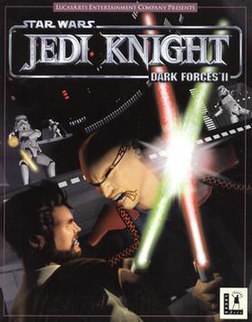
No. 19 — Star Wars – Jedi Knight: Dark Forces II
Genre: First-Person Shooter
Release: 1997
Platforms: Windows

I’ve probably clocked more hours with Dark Forces II than I have with literally any other FPS out there, current or classic. The sequel to the Doom-esque Dark Forces, Jedi Knight puts you in the shoes of Rebel agent Kyle Katarn, who, through the course of the game, realizes his Force potential and trains to become a Jedi Knight. The game was a good shooter with tight gameplay and sweet graphics, sure — but the real joy came from hacking away at Stormtroopers with a lightsaber and Force-pushing Trandoshans around. I beat this game more times than I care to remember, and still dust it off from time to time. I mean, come on — this game brought me that much close to fulfilling my dream of becoming a Jedi. What’s not to love?


No. 18 — Sonic the Hedgehog
Genre: Platformer
Release: 1991
Platforms: Mega Drive / Genesis, iPod, iPhone OS, Virtual Console, Game Boy Advance, Xbox Live Arcade

Alright, so the Sega Genesis didn’t have blast processing like they claimed in the early ‘90s (what the hell does blast processing even mean?), but the console did sport the fastest thing around: Sonic the Hedgehog. He was blue, he had red sneakers, he was a hedgehog, and he could run fast — really, really fast. Speeding through the levels at breakneck speed was job one in this game, and its intensity and innovative level design have yet to be rivaled. The ‘90s were an extreme time — there was Surge and Pearl Jam and Ninja Turtles. Sonic fit right in — an extreme hero for our extreme childhoods.


No. 17 — Advance Wars
Genre: Turn-Based Strategy
Release: 2001
Platforms: Game Boy Advance

I loved my Game Boy Advance — I still do, in fact. If my Game Boy Advance had been a pet, I would have smothered it with love until it curled up and died. It was like holding a Super Nintendo in your hands, and it really just did not get better than that. Advance Wars, a turn-based tactics game, was my favorite game on the console, and still remains a regular contender in my roster of games I play. The game was simple, elegant, and masterfully designed. Gameplay was intuitive and the difficulty ramp was steep, but not too steep. I beat this one probably two or three times and then continued playing on the versus maps long afterward. Maybe the best feature of the game? The map editor.


No. 16 — Halo 2
Genre: First-Person Shooter
Release: 2004
Platforms: Xbox, Windows

The day Halo 2 came out, I did not stop smiling for probably seven hours. And even then, the only reason I stopped smiling was because we ran out of pizza (traumatizing, I know). We had two TVs, two Xboxes, and two fresh copies of Halo 2 still smelling of cellophane. The game improved upon its processor in so many ways, and still managed to keep the core of the game alive, something Halo 3 kinda sucked at. Of the trilogy, Halo 2 remains my favorite, and my high school buddies and I got together fairly regular to school each other over system link. Oh, and about that cliffhanger ending — suck it up and quit whining, n00bs. I thought it rocked.

1.21.2010

R#09's Top 25 Video Games of All Time! (25-21)

Follow all of my favorite video games right here!

This is by no means a definitive list of the greatest video games of all time. No, not by a long shot. These are simply the games that I, personally, enjoy playing the most. Many of them are games I grew up playing, some I still play regularly today — and still others are more recent favorites. But rest assured, these are some of the greats — the games that have no equals.

I compiled this list out of boredom, mostly, but also because I’ve been wanting to do something like this for a while. I’ve been reminiscing a lot lately about the classics and about the games of my early life. I suppose that was the inspiration for this.

I will be posting this as a series of entries, tackling five games a day for the next week or so. The final post will be my favorite game of all time, along with a lengthy list of honorable mentions. Check back often for updates!

Enjoy and, please, by all means, discuss!


No. 25 — Columns
Genre: Puzzle
Release: 1990
Platforms: Arcade, TurboGrafx-16, Sega Master System, Mega Drive / Genesis, Sega CD, Game Gear, Super Nintendo, Game Boy Color, Virtual Console, NEC PC-9801, MSX 2, iPhone OS

Tetris? Screw Tetris! Alright, so that might be a bit harsh. But seriously, when I was a wee lad, I never played Tetris. Columns was where it was at. I was raised on Genesis, you see. I wasn’t an SNES kid like everyone else on my block. So when it came to puzzle games, Columns reigned supreme. Besides, Columns was faster, more difficult, and just downright more intense than Tetris or many of the other puzzle games popular at the time. I still play this classic puzzler from time to time, and I’m always amazed by how unfailingly intricate it is. This is a tough one to beat, but a classic nonetheless.


No. 24 — Final Fantasy VII
Genre: Role-Playing Game
Release: 1997
Platforms: PlayStation, Windows, PlayStation Network

Of course this is on here. Could I even pretend to call myself an RPG fan and not include FFVII? I mean, yeah, its reputation is a little bloated, and people do tend to go a little gaga over it, but the hard fact remains: FFVII is a genre-definer. It’s one of the first games I remember with truly stunning cinematics, and definitely set the stage for the future of storytelling in video games. Nothing like FFVII had been done before — the plot was intricate and beautiful, and there were very real stakes placed on the player’s shoulders. One of my fondest memories as a kid was staying up for almost two days straight playing this game over at a friends house on his PlayStation.


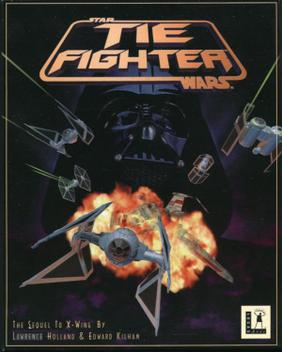
No. 23 — Star Wars: TIE Fighter
Genre: Space Flight Simulator
Release: 1994
Platforms: DOS, Macintosh

You know, back in the day, LucasArts knew how to make a damn good game. In 1994, they released probably the best space flight simulator of all time, a little game called Star Wars: TIE Fighter. The sequel to Star Wars: X-Wing, TIE Fighter revolutionized flight sims and put you smack dab in the cockpit of the Galactic Empire’s most infamous spacecraft. The graphics at the time were fairly mind-blowing as well, and the game still holds its own against more modern flight sims. It’s successors, X-Wing v.s. TIE-Fighter and X-Wing Alliance, weren’t too bad either, and got plenty of hours of play on my computer.


No. 22 — Shenmue
Genre: Adventure
Release: 1999
Platforms: Dreamcast

The Dreamcast, bless its heart, died a needless and early death. Let’s be honest — the console freakin’ rocked, but nobody knew that because they were too busy drooling over their PlayStations and high-fiving each other about Grand Turismo. Not to knock the PlayStation, but it did overshadow the defenseless Dreamcast, and ultimately spelled doom for Sega as a console-designer. In any case, I owned a Dreamcast, believe it or not, and amongst its killer titles was an innovative adventure game called Shenmue. In the game, you took the role of Ryo, a young martial artist, who is searching for the truth behind his father’s murder (a tale that would eventually span two games). The game was akin to the old point-and-click adventure games, such as Day of the Tentacle, with Ryo traveling around his hometown, picking up clues, doing odd-jobs, and delving deeper and deeper into the mysteries of his father’s murder. Cheesy voice-acting aside, this one is easily a genre classic.


No. 21 — StarCraft
Genre: Real-Time Strategy
Release: 1998
Platforms: Windows, Mac OS, Nintendo 64

Before Blizzard hit the jackpot with World of Warcraft, they were busy punching babies and making kickass games like Warcraft II, Diablo, and one of my personal favorites, StarCraft. I’m a huge RTS fan, and StarCraft was one of the first to introduce drastically different armies that were somehow completely balanced with one another. The Zerg were fast and brutal; the Protoss were methodical, thorough, and powerful; while the Terrans floated somewhere in between with their gruff marines and hoverbikes. I’m rubbish at the game — truly terrible. I just get wrecked on BattleNet. But the game is still enjoyable as hell, and I can’t wait for StarCraft II.


1.19.2010

'Eli' has action, heart


The post-apocalyptic future of “The Book of Eli” is, like so many other post-apocalyptic futures, a depressing and dismal place. The land is scorched and barren, more desert now than anything else. Water, bullets, and gasoline are commodities, and roving bands of dirty, be-goggled biker gangs roam the wastes, waylaying travelers and generally being violent, Mad Max-esque vagrants.

Denzel Washington plays the titular character lugging his titular book across the arid wasteland of this post-fallout America. Eli has been wandering for 30 years, steadily working his way west, where he believes the book will be safe. Guided by his own staunch faith in the book, Eli doesn’t stray often. But he finds himself in a poor, dusty village, where the local mayor / crime lord, Carnegie (the enigmatic Gary Oldman), takes a special interest in Eli and his unique book.

Shot masterfully by director of photography Don Burgess, and directed by the Hughes Brothers, Allen and Albert, “The Book of Eli” is a film that truly transports the viewer. It creates an illusion so vivid and real, that one can’t help but be drawn into it. It utilizes muted grays, browns, and oranges to paint its world, producing a style all its own.

The action is top-notch and shot dynamically with clear, concise shots and some fancy camerawork to boot. In one scene, the audience moves between two sides of a shootout, handheld camera shaking slightly in the style of an embedded journalist in a warzone. And yet, “The Book of Eli” is refreshingly devoid of the insane camera angles and confusing pans and zooms that plague the modern action films that Michael Bay might helm.

Performances are fantastic all around, from Washington’s stoic Eli, to Oldman’s raging Carnegie. Mila Kunis manages well enough beside her veteran costars, and there’s a few memorable cameo performances from the likes of Tom Waits and Michael Gambon.

“The Book of Eli” drags in spots, its plot meandering at times much like its pilgrimaging protagonist. But all in all, it offers a well-made sci-fi action film with a soul.

11.29.2009

Video Review: Paranormal Activity

I share my thoughts on the horror film Paranormal Activity and talk about the downsides of CGI. Please excuse all the "umms" and the "uhhs" and the awkward ending. Leave your feedback below!

8.05.2009

Phillips, Scott to take over At the Movies

Rejoice!
A year after its extreme makeover of "At the Movies" went over like "Heaven's Gate," Disney's ABC Media Productions said Wednesday it is overhauling the Chicago-based syndicated TV program yet again in hopes of reconnecting with its respected past.

Gone are Ben Lyons of E! Entertainment Television and Ben Mankiewicz of Turner Classic Movies, the cable hosts Disney chose last summer to front what it called "the next generation of the series," in favor of a return to dueling newspaper film critics, Michael Phillips of the Chicago Tribune and A.O. Scott of the New York Times.

Thank the Powers That Be! Finally, some professionals who know what they're talking about. No more of Mankiewicz's blabbering, and I hope to never look upon the demonic visage of Ben Lyons as long as I shall live. I loved Phillips' and Scott's stints in Ebert's stead with Richard Roeper, so here's to hoping the best show about movies stays the best show about movies! Updates as they are needed.

7.28.2009

Arcane Legions to revolutionize miniature gaming

Miniature gaming has never quite broken into the mainstream, and for good reason. The time, money, and effort required typically turns casual gamers away. Warhammer 40k and HeroScape, arguably the two most well known products of the genre, both have their fair share of issues. Warhammer is time-consuming and downright costly, with even the smallest units costing upwards of $20. HeroScape, though admittedly cheaper and more accesible to younger and more casual gamers, is too simple in its mechanics to offer strategists much to go on.

WizKids, a company sadly no longer in existence, sought to bridge this gap years ago with games like Mage Knight and HeroClix, two amazing ventures into collectable miniatures. Mage Knight was the forerunner — its miniatures were pre-painted, highly detailed, affordable, and sported handy dials on their bases that tracked health, damage, and special abilities. HeroClix carried on the tradition, allowing players to pit their favorite superheroes against one another.

Sadly, the games didn't last, and WizKids became no more. And since then, the genre of miniature gaming has grown cold.

But now, the guys from WizKids are back, and they're releasing a new, state-of-the-art miniatures game called Arcane Legions. This game seeks to bring miniatures gaming back into the mainstream with affordable, playable miniatures that strike a perfect balance between accesibility and complexity.
In the year 42BCE, a mysterious magical force was unleashed upon an unsuspecting world. The miasmic shockwave of pure otherworldly magic spread outward from a point somewhere in the middle east, and in a few short hours plunged the entire globe into chaos. In those terrible moments, human civilization changed forever.

Magic infused their very bones, manifested in their children, came unbidden to the fingertips of their women, and plagued their countryside in uncontrolled bursts of power. Ordinary beasts of the wilderness were turned by these bursts into fanciful creatures of legend. Entire tribes of humans from all corners of the world were altered by the flood of uncontrolled magic, changing before the very eyes of their friends and neighbors into elves, dwarves, orcs, trolls, centaurs, and even minotaurs. Creatures that normally existed between our reality and others were shunted into this one, leaving ghosts, faeries, and other magical creatures stranded in our world in ways they were never intended to be. Even remnants of the Old World, gods of the ancients and their ken, were awakened from their immortal slumber through this great cataclysm to trouble mankind once more.

The world had changed forever.

The year is now 37BCE and the middle-east sits at the center of a vast struggle to control humanity’s fate. Three powerful nations have harnessed the power unleashed by the day of chaos, and they struggle to claim dominance over the known world. Their arcane legions are now yours to control.
The setting is unique enough — ancient factions battling for supremacy in a magic-infused world. But it's the gameplay that really strikes a chord with me. It was after I looked into this game that my ears perked up — this could be something big.

The game's press release details the mechanics and marketing of the game:
If you ever wondered what happened to the guys from WizKids just take a look at this game and you will know what they have been doing with the downtime after WizKids closed their doors.

Players each field "bases" of variable sizes (Sortie/small and Formation/large) with individual figures inserted into starting positions on the base. The goal is to control victory point areas and inflict losses on the opponent. Movement and battle resolution are conducted through a unique formation management mechanic that allows players to move figures around on the unit bases to increase either movement/melee/ranged combat at the cost of losing capabilities in the other areas.

Currently wrapping up playtesting as of May 2009. Arcane Legions will be available in September of 2009. Initially, look for 3 different factions (Egyptians, Romans, and Han Dynasty).

Figures are highly detailed true 25mm made from PVC 105. Common figures are unpainted with colored tempo prints on banners and shields, while all the uncommon, rare and Commander figures (Booster Pack contents) are fully pre-painted. The game is designed to use both types. There are 9 different unpainted common figures for each faction and at least 20 different fully painted premium figures for each faction. If you buy a legion bundle of a faction you receive around 70 prepainted figures, whereas buying one of each army pack gets you about 54 unpainted figures.

With more than 110 figures, the Starter Pack includes small armies for all three factions and enough formation bases, sortie bases and base cards for a complete two player game - all for $34.99

The Army Packs contain 40 common soldiers - $14.99

The Cavalry Packs contain 15 mounted figures - $14.99

The Booster Packs contain 5-10 (depending on the size) Leader / special figures and their associated base cards, plus five additional formation base cards for use with figures from the Army and Cavalry Packs - $11.99

All Arcane Legions products (with the exception of the Starter) can be purchased faction specific.
So, let's look at the great aspects of this game, point by point.
  • Formation bases make for quick, easy movement and static abilities and bonuses. No more arguing over formations or groupings, and no more moving one unit laboriously after another. Units move together, stay together, die together.
  • It's possibly the most affordable, reliable miniatures game in the history of the genre. Common units can be bought for less than dollar a unit in army and cavalry packs, while commander and special units come in faction specific boosters. That means no more digging around in a booster box for useful units — because they are faction specific, you will always get units you can use.
Those two things are enough to convince me that this game has a chance. Its creators feel this is the one — the miniatures game that will catch on in a big way. And frankly, I'm quick to agree. I'm hopeful for Arcane Legions, and will definitely be checking it out once it hits store this September. Look for my review of Arcane Legions next month!

More info on the game:
BoardGameGeek
Arcane Legions

7.25.2009

Comic-Con: Days Two & Three

Mickey Rourke as Whiplash in Iron Man 2. Oh, no, I'm sorry. I'm being told this a candid shot of Rourke leaving his home on any given Tuesday afternoon.

Here we go! Let's wrap-up Comic-Con days two and three!
  • Gary Oldman let slip at a panel that they might, in fact, be filming a follow-up to The Dark Knight next year, for release in 2011. He later backpedaled in an interview, stating that he had no idea when they were filming, but that it would be "soon." More here. Sounds like Oldman was just stirring up the fanboys, but the notion of a third Nolan film filming soon is intriguing. Could this mean a script (complete with villains) is nailed down?
  • Halo Legends, an upcoming anime based on the events of the Halo trilogy of video games, premiered. Check it out here.
  • Quint over at AIC has a solid write-up of the Iron Man 2 panel with director Jon Favreau. Mickey Rourke will be playing Whiplash, and some of the footage shown included an action sequence involving the character and Robert Downey, Jr.'s Tony Stark. However, the biggest reveal of the panel was confirmation of the appearance of War Machine, whom comic fans will recognize as the armored alter ego of Rhodes (played by Don Cheadle this time around). It's a good read, so check it out.
Check back for more updates!

7.24.2009

Alice trailer making the rounds

Tim Burton's Alice in Wonderland has a trailer! Check it out here.

I'm kinda feeling put-off by how much they're banking on Depp's Mad Hatter. I hope the movie doesn't revolve around him for once. Also keep an eye out for obvious 3-D effects (the Cheshire Cat, Depp's Hatter unrolling rugs, et cetera).

1.16.2009

Exciting news, not-so exciting news

My spies have informed me of two things this morning. One: the legal dispute delaying Zack Snyder's Watchmen adaptation has come to a close, with Warner Bros. and Fox coming to an agreement. And two: now that Fox has lost its white-knuckled hold on one franchise I love, it's set its sights on a new one: Cowboy Bebop.
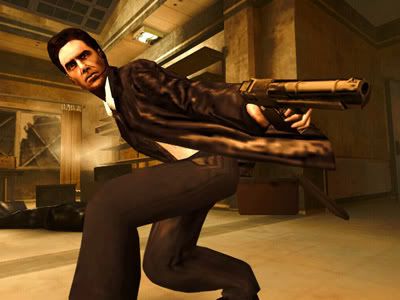

Yes, that's right. Fox has secured the rights to Cowboy Bebop and wants KEANU REEVES in the lead role of bounty hunter Spike Spiegel (see preliminary casting photo to the left -- lulz) My guess is that the soundtrack won't even feature Yoko Kanno. I also anticipate a happy ending.

I'm glad Watchmen is out of limbo and headed for theaters, but I am not looking forward to my least favorite studio producing an adaptation of my favorite anime.

10.26.2008

Bush made human


W. (2008)
Directed by Oliver Stone
Starring Josh Brolin, Richard Dreyfuss, Jeffrey Wright
Rated PG-13, 131 minutes
*** / *****

In just a few short days, the U.S. will elect its new President. George W. Bush, after eight long years, will step down, leaving a legacy of war, questionable policies and steadily declining approval ratings. Oliver Stone attempts to define this legacy, and make sense of a genuinely fascinating public figure, in the new biographical film entitled simple “W."

Stone is a versatile filmmaker, known for everything from the 1986 Vietnam film “Platoon” and 2004’s incoherent “Alexander,” to the 1991 Oscar-winner “JFK” and 2006’s “World Trade Center.” Though “W.” sports its fair share of flaws, I’m tempted to call it Stone’s best since “JFK,” if only for its superb portrayal of Bush.

“W.” is a fairly straightforward biopic, following in a non-linear fashion the rise of Bush from alcoholic college burnout to governor and, finally, President of the United States of America.

Promising up-and-comer Josh Brolin (whom I first noticed in Robert Rodriquez’s “Planet Terror,” and later recognized in the Coen brothers’ brilliant “No Country for Old Men”) tackles the role of George W. Bush. Brolin doesn’t really look like Bush—he’s taller, better looking, with a firmer chin—but 20 minutes into the movie, that doesn’t matter.

Brolin nails it: the accent, the mannerisms, that awkward little this-press-conference-isn’t-going-well chuckle we’ve grown to hate. And with Stone superimposing Brolin’s likeness on existing news footage of Bush, the illusion is made solid. Brolin is fully believable.

The cast in general is stellar. Stone has done some interesting yet brilliant casting, with supporting actors Jeffrey Wright (playing Colin Powell), Richard Dreyfuss (as the leering Dick Cheney) and Thandie Newton (unrecognizable as Condoleezza Rice) being the real standouts. The uncomfortable, often heated war room conflict between Powell and Cheney was an intriguing aspect for me—it could have been a film all its own.

In some aspects, though, “W.” is disappointing. Often, things are overlooked. Events such as the 2000 and 2004 elections, rife with scandal and doubt, receive mere offhand mentions, while Bush nearly choking to death on a pretzel warrants a scene in slow-motion. In this, “W.” feels lopsided and disjointed, at once relevant and yet somewhat meaningless.

But what really makes this film is the insight it presents to the audience, painting Bush not as the unintelligent country bumpkin caricature he’s become, but as an honestly well-meaning—if misguided—man. We see him troubled, unable to sleep, a grimace playing at the corners of his mouth, pondering the mistakes of his administration. Bush is a man pushed into politics by a need to impress his father.

Lacking self-confident decisiveness, he surrounds himself with a cabinet of genuinely intelligent (and conniving) people, and allows himself to be swayed in a peer-pressure-esque fashion by people like Cheney and the manipulative Karl Rove (Toby Jones), whose ulterior and sadistic motives are not made clear.

“W.” is not overtly anti-Bush, nor does it attempt to garner sympathy from the audience. As in “JFK,” Stone remains neutral, and allows the story to unfold, with competent actors at the helm. “W.” merely presents, for once, a case for George Bush the person, not George Bush the President—a foolish boy who grew up and tried to finish what daddy started.

9.20.2008

Metallica has returned

“What don’t kill ya, make ya more strong,” growls Metallica vocalist and rhythm guitarist James Hetfield. These lyrics, uttered on the track Broken, Beat & Scarred, sum up the band’s new album, Death Magnetic, which just might be their best effort since 1991’s self-tilted “black” album. After 17 years of disappointing albums and lukewarm critical reception, Metallica is back.

The 2001 departure of longtime bassist Jason Newsted sparked a series of heated conflicts within Metallica, culminating in Hetfield’s admission into rehab for alcoholism during filming of the documentary Some Kind of Monster. But in 2003, the kings of thrash metal were back in the studio, recording tracks for St. Anger. Fans were psyched to hear what this clean and sober Metallica would have to offer.

The result was less than stellar. St. Anger was almost universally lambasted by fans and critics alike. It was a thrown-together effort that lacked both the speed and the ferocity of 80s-era Metallica. Gone were the solos, replaced by lazy, middling riffs and an infamously “steely” sounding snare drum. It seemed that the Metallica the fans had come to know and love was gone, replaced by a handful of 40-something sellout has-beens who neither cared for nor were aware of their fanbase.

But Death Magnetic, released Sept. 10, is the album Metallica fans have been waiting 17 years for. This is a return to Metallica’s 1980s heydays—longer songs, blistering guitar solos, aggressive drumming, growling vocals and intense bass backing. Death Magnetic has more in common with albums like …And Justice For All and Master of Puppets than any of the band’s 90s fair.

After a rough few years of rehab and therapy, followed by a dismal album, it seems what hasn't killed Metallica has only made it stronger.

The album opens with "That Was Just Your Life," a track reminiscent of 1988’s "Blackened" in its quiet, slower-paced beginning digressing into a raging torrent of guitar and drummer Lars Ulrich’s pedal-laden madness. It’s almost shocking to hear Metallica’s raw 80s style—albeit in the drop C tuning of St. Anger.

Next up is "The End of the Line," a song many fans might be familiar with from Metallica’s recent show in Seoul. It’s a solo-heavy track with fancy fretwork courtesy of both Hetfield and lead guitarist Kirk Hammet. This was the first track on the album that made me realize I was listening to something special.

Other notable tracks include "Broken, Beat & Scarred," "All Nightmare Long" and the single, "The Day That Never Comes," a song evocative of the classic track "One." And, for the first time since 1988’s …And Justice For All, Metallica included an instrumental track (and a damn good one at that), entitled "Suicide and Redemption."

There are some letdowns, though. "The Unforgiven III" feels unnecessary and unfinished, and generally out-of-place on Death Magnetic. It sounds like a remnant of their more mainstream 90s style, and is the only real disappointment on the album. "Cyanide" is also fairly bland, but both tracks are quickly forgotten after songs like "The Judas Kiss" and "My Apocalypse" follow to blow them away.

Backup vocals are virtually nonexistent on Death Magnetic, though maybe we should be thankful, considering the absence of Newsted, the only member of the band other than Hetfield capable of carrying a tune. But Robert Trujillo, Metallica’s new beast of a bassist, makes his official record debut here, and most definitely proves himself with furious finger-style plucking. He is showcased nicely in a few tracks, notably "The End of the Line."

Hammet is at the top of his game, shredding solos and weaving in and out of Hetfield’s furious rhythm guitar. The pair of them create a fiery duel of monstrous riffs. Ulrich reclaims his throne as well, divorced from that awful snare drum and doing what he does best—double bass-pedal and lots of it. As songwriters, the members of Metallica have produced some great tracks, with superb instrumentation and lyrics that hearken back to the golden days of thrash metal. The navel-gazing than ran rampant throughout St. Anger is gone—these musicians have gotten over themselves and returned to their passion for music.

This Metallica fan was one album away from giving up on the fearsome foursome, but my love for the band has been rekindled with Death Magnetic, an album that pulls style right out of the 80s and modernizes it for fans old and new. It’s hard to believe it, but these middle-aged rockers have put out a truly kickass album. Despite a few bland tracks, Death Magnetic is, hands-down, the best Metallica album in 17 years, and well worth a listen for any fan, loyal and apprehensive alike.

You can listen to the album streaming in its entirety on the official Metallica website.

9.11.2008

Lou Lumenick is a terrible human being

I am completely speechless. New York Post film critic Lou Lumenick, who days after Heath Ledger's death posted a defaming article on the young actor, is at it again. I am now convinced that he is an irrevocable asshole. Courtesy of Daily News:
The audience at the Toronto Film Festival press screening of Slumdog Millionaire didn't know they were also going to get live entertainment Saturday.

There'd been lots of Oscar buzz about Danny (Trainspotting) Boyle's flick, about a poor Mumbai guy who wins a girl and becomes a national hero by going on a game show. So the screening room was packed.

Soon after the lights went down, a source tells us, "a man in the audience started yelling, 'Don't touch me!' People looked around and shrugged. Ten minutes later, the voice yells again, 'I said don't touch me!'"

Again, people shrugged off the disturbance. But a few minutes later, says our source, "the guy stands up in the darkness and thwacks the guy behind him with a big festival binder. He hit him so hard everybody could hear it. Everyone freaked out and turned around."

The thwacker? New York Post film critic Lou Lumenick.

The thwackee? Esteemed Chicago Sun-Times film critic Roger Ebert.

After battling thyroid and salivary gland cancer for years, Ebert, 66, can no longer speak.

"Apparently, Roger was just trying to tap Lumenick on the shoulder to signal him that he couldn't see the movie," surmises our source. "He was trying to ask him to move over a bit."

Though Lumenick seemed surprised to see whom he had struck, he offered no apology, according to another source.
Now, just in the interest of journalistic fairness, here's Ebert's response.

God, how I hate Lou Lumenick.

9.04.2008

In a world without the Voice

You might not know who Don LaFontaine was. If you had seen him on the street you likely would not have recognized him. His name did not evoke the grandiose of action heroes, the fluttering pulses of heart throbs or the excitement of socialites. But then again, LaFontaine was not an artist in the spotlight. He operated not in front of a camera, but behind a microphone, on soundstages and in recording studios. He was an obscure name in the film and television industries. But you know Don LaFontaine. You have grown up hearing his voice.

In his 33 years in the entertainment business, LaFontaine (known to many as the Voice) recorded the voiceovers for 750,000 TV commercials and over 5,000 movie trailers. That gravely baritone, so uniquely his, ushered in the fall and summer movie seasons and riled the audience during the coming attractions. LaFontaine was as much a part of filmmaking as anyone. He was a tried and true veteran of the industry. And I already miss him.

LaFontaine died Sept. 1 of complications due to a blood clot in his lungs. The 68-year-old continued working well into his later years, even making a rare on-screen appearance in a Geico commercial in 2006. It was a self-parodying performance that poked fun at the often intense voiceovers of movie trailers and that cliché phrase that LaFontaine himself made so ridiculously well-known: “In a world where…”

“We have to establish the world we are transporting [the audience] to,” LaFontaine said of the phrase in 2006. “That's very easily done by saying, ‘In a world where... violence rules.’ ‘In a world where... men are slaves and women are the conquerors.’ You very rapidly set the scene.”

Narration is not as common in movie trailers nowadays. More often, the trailer will be accompanied by text or simply rely on snippets of dialogue from the film. But as far back as the 30s and continuing long into the 90s, movie trailers were narrated by people like LaFontaine. And there is no doubt, no feasible argument—LaFontaine was the most gifted artist in his field and shall remain uncontested even after his death.

Personally, losing LaFontaine has affected me greatly. As a child, it was his distinct voice that got me excited at the cinema. In my head, LaFontaine narrates my life: “In a world where Matt is late for his 9:15 class and didn’t eat breakfast.” The man was a presence. He was everywhere, dabbling in every aspect of entertainment, a voice so familiar and yet unknown to most. With trailer voiceover phasing out and now this untimely passing, I feel as though it is the end of an era.

Films are advertised differently now. One has only to look at the viral campaigns of films like Cloverfield or The Dark Knight to realize that the business has changed. But LaFontaine will not soon be forgotten. He leaves behind a 33-year legacy of consistently amazing work. In terms of his impact, I think the obituary says it best:

“The omnipresent baritone and gravely bass undertones of Don LaFontaine’s distinctive voice had the unique ability to seamlessly embellish big-screen kisses, slice through over-the-top explosions, perfectly pair with robust musical scores, glide alongside car chases and effortlessly co-star with any A-list talent in Hollywood.”

LaFontaine was often quoted as saying that he did not care if people knew his face or his name, but that he hoped they knew his voice.

8.29.2008

Max Payne trailer is up: my thoughts

The first full-length trailer for Max Payne, starring Mark Wahlberg, is up now on Yahoo. The film will be an adaptation of the first game in the Max Payne franchise, in which the titular manic-depressive detective infiltrates a drug ring dealing in the powerful hallucinogen known as Valkyr. Watch it here.

I am very mixed on this film. Max Payne is one of my favorite PC games. It's a heavily stylized game, like a John Woo-directed pulp noir. The game itself is very cinematic, both in its style and story. I figured it would lend itself well to cinema, but this trailer doesn't particularly give me hope. Payne's signature gravely noir-esque voice-over just comes off as ridiculous on screen, and Wahlberg (who I really enjoyed in The Departed) seems wooden in the role. There's also some weird moments that look as though they were pulled right out of the movie Constantine. I'm assuming these are hallucinations caused by the Valkyr drug, but they're still incredibly out-of-place. The director, too, doesn't make me feel any better. John Moore hasn't had much experience outside of big-budget remakes, so I'm hesitant to even trust him with the source material.

The film looks slick though, with grainy tones and some killer cinematography. But at this point, I'm calling a bomb, critically and commercially. I don't think this film will be good, despite the awesome games it hails from.